In modern texting and online communication, short forms and abbreviations are used everywhere. One such commonly seen term is “IS.” At first glance, it may look like a simple word, but in texting and slang, it can carry different meanings depending on context.
In this complete SEO-optimized guide, you’ll learn the meaning of IS in text, how it is used, real examples, related slang, and when to use it properly. Whether you’re a beginner or active social media user, this guide will help you understand it clearly.
IS
“IS” is a short and flexible term used in texting, chats, and online platforms. While traditionally it is a verb (“is” as in grammar), in texting slang it can also represent short phrases or emotional responses.
👉 Important:
The meaning of “IS” depends heavily on context, tone, and conversation style.
I’m sorry
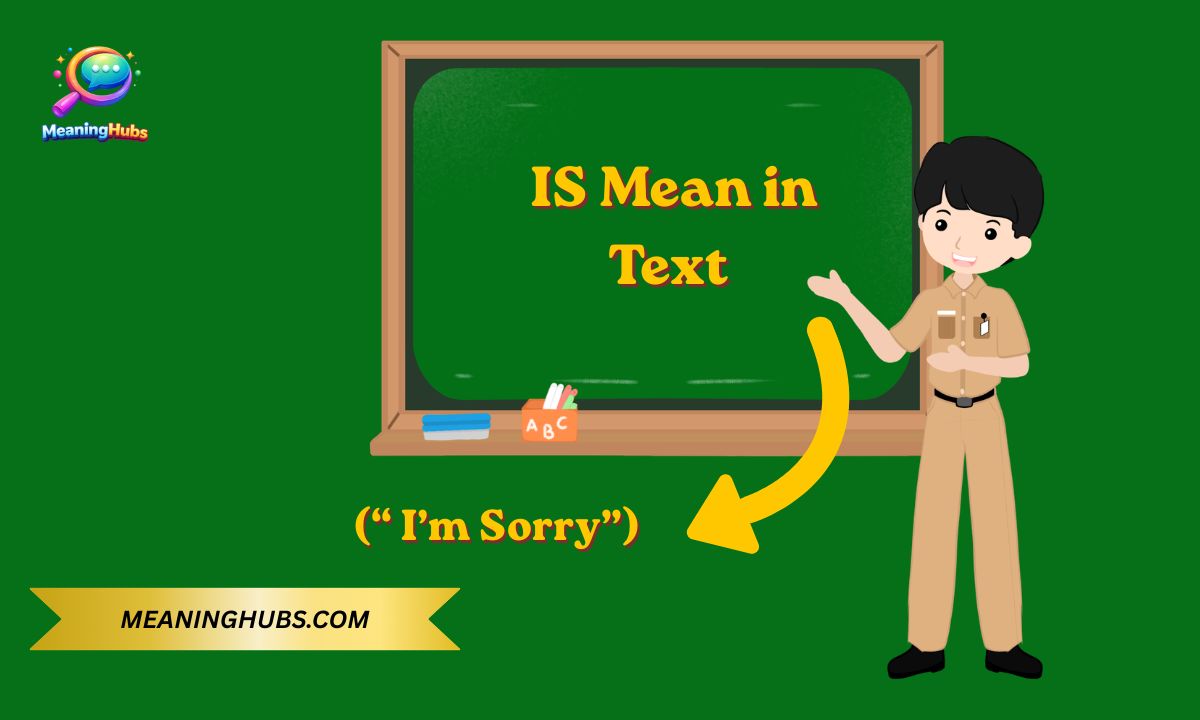
One of the less common but important meanings of IS in texting is “I’m Sorry.”
👉 This usage appears in:
- Fast texting conversations
- Emotional or apologetic replies
- Situations where users shorten phrases
When IS means “I’m Sorry”
- During quick apologies
- Casual chats where speed matters
- Informal messaging environments
Example
- “IS, I didn’t mean that”
- “IS bro, my mistake”
- “IS, I’ll fix it”
👉 In these examples, IS replaces a full apology phrase to save time.
Tone Insight
When used as “I’m sorry,” IS usually carries:
- A soft tone
- Casual apology
- Quick acknowledgment of mistake
Other Common Meanings of IS
While “I’m sorry” is one interpretation, IS is more often used in its standard grammatical form or as part of other abbreviations.
👉 Common meanings include:
- “Is” (as a verb)
- Part of phrases like “IS this okay?”
- Typing shorthand without capitalization
👉 This makes IS highly context-dependent, unlike fixed slang terms.
Example
Here are real-life examples showing how IS is used in different contexts:
As “I’m Sorry”
- “IS, I forgot your message”
- “IS yaar, didn’t reply earlier”
As a Normal Word
- “This is amazing!”
- “What is going on?”
Mixed Usage
- “IS, this is confusing”
- “IS bro, this is my fault”
👉 Always read the full sentence to understand the correct meaning.
Related Slang
To better understand IS, it helps to know similar texting abbreviations used in casual conversations.
Common Related Slang
- SRY – Sorry
- MB – My bad
- MY BAD – Apology slang
- IDC – I don’t care
- IMO – In my opinion
- IDK – I don’t know
Quick Comparison Table
| Slang | Meaning | Usage | Tone |
| IS | I’m Sorry / Is | Depends on context | Casual |
| SRY | Sorry | Apology | Informal |
| MB | My Bad | Accepting mistake | Friendly |
| IDK | I don’t know | Response | Neutral |
| IMO | In my opinion | Opinion sharing | Casual |
👉 These abbreviations often appear together in chats.
Categories
IS can be grouped into different usage categories based on how it is used:
Communication Type
- Text messages
- Social media chats
- Online gaming chats
Emotional Context
- Apology
- Clarification
- Casual conversation
Tone Type
- Informal
- Neutral
- Friendly
👉 This flexibility is why IS is widely used but sometimes confusing.
Read This: What Does ENO Mean? Full Meaning, Uses, Slang, and Real-Life Examples
IS definition by meaninghubs.com – The Slang Dictionary
According to slang-style dictionary usage, IS is a multi-purpose abbreviation that can represent both a standard English verb and a shortened emotional expression like “I’m sorry.”
Key Highlights
- It is not a fixed slang term
- Its meaning changes with context
- It is commonly used in fast typing
- It appears more in casual chats than formal writing
👉 Understanding IS requires reading the entire message, not just the abbreviation.
Why IS Can Be Confusing
Unlike clear abbreviations like LOL or BRB, IS is:
- A real English word
- A possible slang abbreviation
- Used in multiple ways
👉 This creates confusion for beginners.
Common Mistakes
- Assuming it always means “I’m sorry”
- Misreading it in sentences
- Using it in formal writing
👉 Context is everything when interpreting IS.
When to Use IS (And When Not To)
Use IS When
- Chatting casually
- Messaging friends
- Writing quick responses
- Using informal tone
Avoid IS When
- Writing emails
- Academic or professional work
- Talking to unknown audience
- Clear communication is required
👉 In formal settings, always use full phrases like “I’m sorry.”
Pro Tips for Using IS
- Always consider the context first
- Use full sentences if clarity matters
- Avoid overusing abbreviations
- Match your tone with the conversation
👉 Smart usage improves communication and avoids confusion.
Conclusion
The meaning of IS in text is not always straightforward. While it can sometimes mean “I’m sorry,” it is more commonly used as a regular English word or shorthand in conversations.
By understanding its usage, examples, and context, you can:
- Avoid confusion in chats
- Communicate more clearly
- Use modern texting slang effectively
In today’s digital world, knowing how to interpret flexible terms like IS helps you stay ahead in online communication.
Frequently Asked Questions
What does IS mean in text?
IS can mean “I’m sorry” in some cases, but usually it is just the word “is.”
Is IS a common slang term?
Not really, it’s more of a contextual abbreviation than a standard slang.
Can IS be used in formal writing?
No, it’s better to avoid it and use full words in formal contexts.
Where is IS mostly used?
It appears in text messages, chats, and casual online conversations.
Should I use IS instead of “I’m sorry”?
Only in casual chats; in important conversations, use full phrases.

Hailey shares simple and clear meanings on MeaningHubs.com, helping users understand words, names, and phrases in an easy and engaging way.